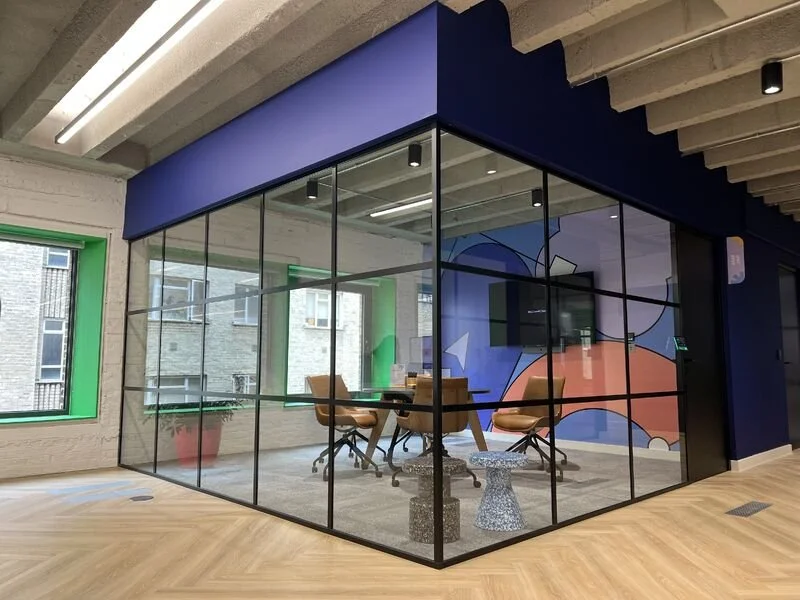
Leading Design Beyond Screens
Leading a team of five designers gave me the opportunity to shape not only the products we built, but also the processes, standards, and culture behind them.
My Approach to Leadership
I believe great design teams don’t happen by chance. They thrive when expectations are clear, collaboration is encouraged, and quality is everyone’s responsibility.
My role wasn’t to have all the answers, it was to create an environment where designers could ask better questions, grow with confidence, and consistently deliver thoughtful work.
Building better design practices
Building Design Quality
To create consistency across the team, I introduced frameworks and review processes that helped designers evaluate their work before sharing it for feedback.
This included:
A 9-point design review checklist
Design quality standards
Consistent UX and UI review practices
Design QA before implementation
Design OKRs
To create shared goals, I introduced Design OKRs to align the team around measurable outcomes rather than individual tasks.
The goal wasn’t simply to deliver more screens → it was to improve quality, strengthen collaboration, increase design system adoption, and create a better experience for both users and the team.
2024 Team Design OKRs:
-
OKR 1: Build trust without feeling like a traditional bank
Simplify complex banking journeys
Create one consistent bilingual product voice
Balance compliance with usability
-
OKR 2: Build One Cohesive Product Experience
Scale Design System Adoption
Govern design quality across teams
Reduce design inconsistencies
-
OKR 3: Reduce friction across critical journeys
Identify user drop-off points
Simplify high-impact experiences
Improve task completion
Scaling Through Systems
As our products grew, consistency became increasingly important.
I helped establish and evolve our design system by contributing reusable components, documenting patterns, encouraging adoption, and working closely with engineering to ensure designs translated consistently into production.
I also led initiatives such as creating loader guidelines and reusable loading patterns
to improve consistency across the product experience.
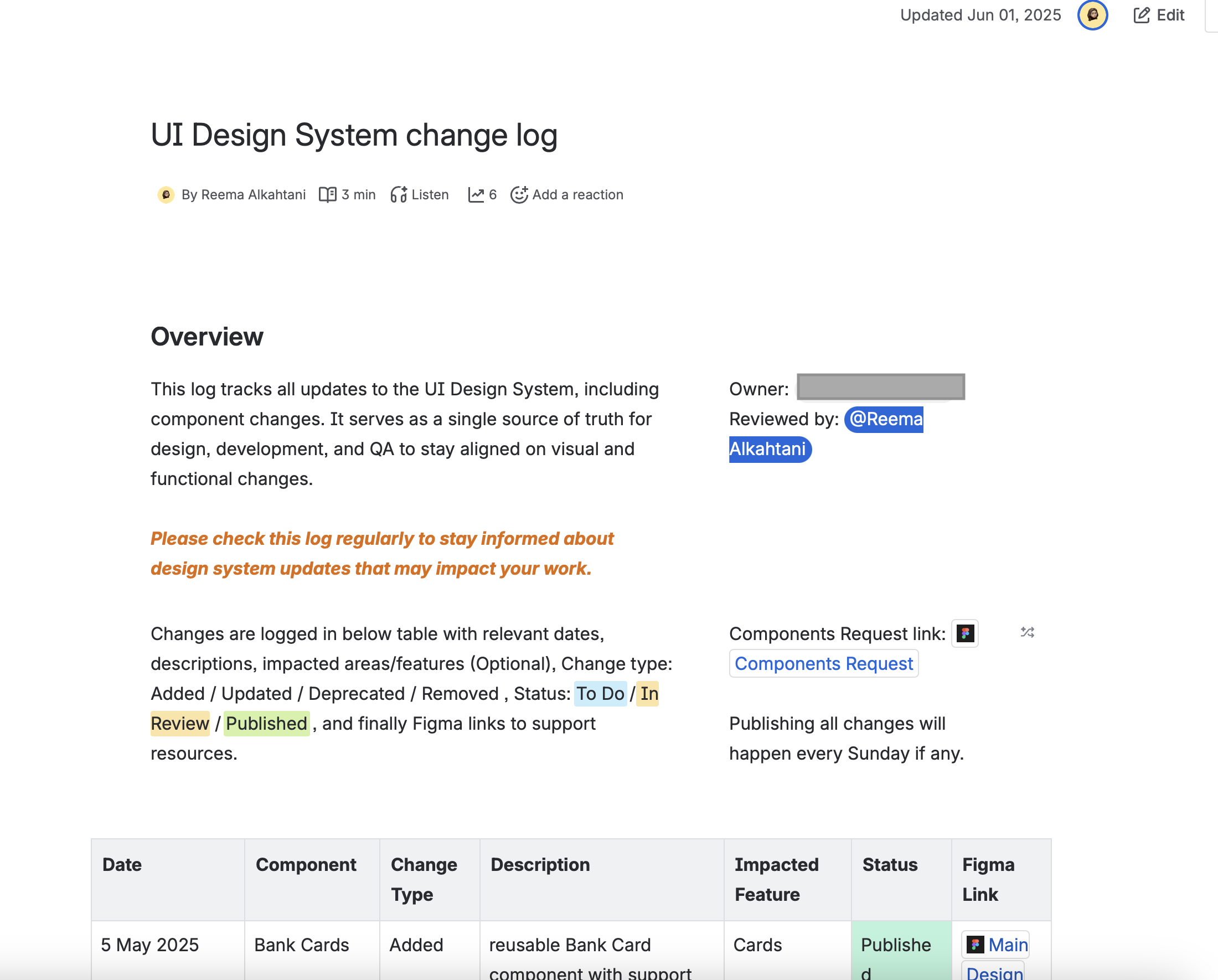
Weekly Design System Change Log
Keeping everyone aligned became increasingly difficult with our design system evolving.
To solve this, I created a weekly design system change log in Confluence. a single source of truth that documented every meaningful update.
It reduced confusion around updates, improved alignment cross functional teams, created a transparent history of design decisions, and minimized implementation issues caused by outdated components
The 9-Point Design Review Checklist
To improve design quality and reduce review cycles, I created a 9-point design review checklist that every designer completed before requesting feedback
This helped the team catch missing states, inconsistent components, unclear user flows, and UX writing issues before designs reached review
The Checklist
-

User Stories
User stories are clearly reflected in Figma → story number, description, and link included
-
User Flow
The full user flow is defined and easy to follow in Figma file
-
Design System
All screens follow the latest design system → components, spacing, and tokens
-
Design States/Scenarios
All states are covered → empty, error, success, loading
-
Interaction Behavior
Interaction behavior is considered wherever relevant
-
Figma Layers
Figma layers and naming are clean and handoff-ready for development
-
Business Alignment
Design aligns with business logic and requirements while still optimizing UX
-

UX Writing
UX writing follows guidelines → tone, clarity, and consistency
-
Internal Review
The feature file owner has reviewed and approved before final review
Coaching & Collaboration
I believe the best ideas come from collaboration.
I regularly worked alongside designers, product managers, developers, QA engineers, and business stakeholders to challenge ideas early, remove ambiguity, and find solutions that balanced user needs with business goals and technical feasibility.
Supporting designers through feedback, design critiques, and day-to-day problem solving became one of the most rewarding parts of my role.